
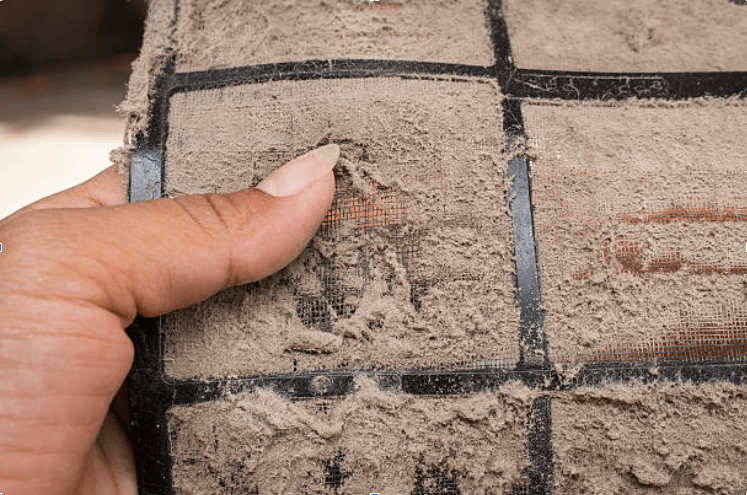
If you’ve ever pulled out your air purifier pre filter and found it coated in dust, you might assume your purifier is doing its job. But is it really?
When you are shopping for an air purifier, it’s common to come across influencer videos and product demonstrations that show dusty air purifier pre filters. The message is usually clear: “Look how much dust this air purifier caught, this means it works well!”
But here’s the truth: a dirty pre filter doesn’t necessarily prove that your air purifier is effective. In fact, all pre filters, whether on a cheap $50 unit or a $1,000 premium machine will eventually look dirty.
Did you know? Every day, your lungs pull in nearly 10,000 litres of air just to extract the 420 litres of oxygen your body needs to survive which makes air quality a direct factor in the health of your lungs and every organ.
In this article, we’ll unpack the reality behind pre filters, explore what really matters when evaluating an air purifier, and explain why visible dust is just one variable to consider when evaluating our indoor air quality.
You can watch a video on this blog post here:
What Is an Air Purifier Pre Filter?
An air purifier pre filter is the first line of defense inside most air purifiers. It’s a mesh or fabric-like screen designed to trap larger particles such as: dust, pet hair, lint, pollen and coarse debris.
The purpose of a pre filter is simple, it is meant to capture the “big stuff” before it reaches the finer filtration layers (like HEPA filters or activated carbon filters). This process helps extend the life of the more expensive filters and also helps in maintaining airflow through the unit.
So yes, it’s expected that our pre filters will look dirty over time. But, a dusty pre filter does not mean an air purifier is filtering at a high level.
Why Dirty Pre Filters Are Misleading
Social media often sensationalises dust buildup on filters. Influencers show close-ups of grimy pre filters, implying the purifier must be excellent because it caught so much debris. But this reasoning is flawed for several reasons:
1. All Pre Filters Collect Dust
Even if you strap a pre filter onto a cheap box fan, you’ll see a lot of dust accumulation. But, this doesn’t mean it’s purifying your air effectively. The pre filters on air conditioners and even stand-alone heaters will also accumulate a lot of debris over time, as well. However, we wouldn’t consider either to be effective air filtration devices.

Source: iStock
2. Visible Dust Isn’t the Real Threat
The human eye can only see particles 10 microns in size and larger. However, the most hazardous particles to humans are ultrafine which are 0.1 microns in size and smaller. These tiny particles can slip deep into our lungs, enter the bloodstream, and affect all the organs throughout the body – including our brains!
Dusty pre filters only prove that large particles were trapped, it does not mean that the purifier is filtering dangerous ultrafine particles efficiently.
3. Context Matters
If you’re running an air purifier during a renovation or construction project, your pre filter will get filthy in no time. However, that’s not evidence of superior purification, it just means there was a lot of larger dust particles in the air. In industrial settings, you would actually need an air scrubber with high airflow (CFM) and HEPA-level filtration to do the job properly.
Watch the full breakdown on: The Truth About Dusty Pre Filters / Air Purification
The Marketing Spin Around Dirty Filters
Many influencers and brands use images of dirty pre filters as shock marketing. They highlight the buildup as “proof” that the purifier works well, when in reality, all air purifier pre filters will look like this over time – regardless of how well they are actually filtering the environment.
For example, if an influencer posts dramatic photos of their dusty pre filter with the caption, “This purifier is amazing!” This means their air purifier simply trapped the same large particles that any pre filter would catch – even a cheap prefilter on an inexpensive fan.

Source: iStock
It’s important to remember that some companies pay affiliates hefty commissions – even 15% of the sale, so influencers have a financial incentive to make dust accumulation look impressive.
The key learning point here is that we should not be impressed by super dusty pre filters.
What Actually Determines Air Purifier Performance?
If you want to know whether your air purifier is effective, instead of looking at the dust on the pre filter, take these factors into consideration:
1. HEPA Filtration
A true HEPA filter captures at least 99.97% of particles at 0.3 microns. This includes pollen, mould spores, and smoke particles. Particles of these sizes are too small for humans to see with the naked eye, but they affect our health.
2. Airflow (CFM)
Clean air delivery isn’t just about the filter, it’s also about airflow. A purifier with weak airflow can’t move enough air through the filter to clean a room effectively. For example industrial air scrubbers can move 700 CFM, whereas small purifiers only manage about 130 CFM, or so. So an industrial air scrubber can sometimes possess over 80% more airflow than less powerful air purifiers. This means it will obtain many more air exchanges in a room each hour.
3. Room Size Compatibility
Air purifiers are rated for specific room sizes. You need to make sure your air purifier is rated for the size of your space to make sure it’s not underpowered. In general, we would like to get at least 4 ACH (Air Changes per Hour) in our environments.
4. Independent Testing
Some filtration performance test results like an EN1822 certification can indicate a filter is of a better quality.
Benefits of an Air Purifier in the Bedroom
We spend about one-third of our lives asleep and it is therefore advantageous to have a good filtration solution in our bedrooms.

Source: iStock
Better sleep quality: If we breathe in cleaner air it prevents microscopic particles from getting into our lungs that can cause congestion or nighttime coughing.
Allergy relief: Installing high-quality HEPA filtration solutions can help capture pollen, dust mites and pet dander. This is recommended for allergy prone individuals.
Reduced asthma triggers: An air purifier can help create a safer sleeping environment for people with sensitive airways. Check out these best air purifiers for asthma, allergies and dust.
Ultimately, maintaining clean bedroom air goes beyond comfort, it supports respiratory health, promotes deeper rest, and can even reduce the long-term strain on your immune system.
Common Myths About Air Purifier Pre Filters
Let’s have a look at a few myths that you might see online:
- Myth 1: The dirtier the pre filter, the better the purifier.
Fact: All pre filters get dirty. Effectiveness depends on airflow and the quality of the filtration, not visible dust. - Myth 2: Expensive purifiers prove their worth with dirtier filters.
Fact: Both budget and premium models accumulate dusty pre filters. Price doesn’t change how a pre filter looks. - Myth 3: If you don’t see much debris on your HEPA filter, your purifier isn’t working.
Fact: The most dangerous particles are invisible. A clean-looking HEPA filter might still be removing harmful ultrafine particles that we cannot see with our eyes.
Maintenance Tips for Your Air Purifier Pre Filter
Even though dirt buildup isn’t proof of effectiveness, proper care is essential for air purifier performance. Here are a few best practices:
- Routine checks: Depending on the air purifier you own, it is important that you check your pre-filter every month or so, especially if it is installed in a high dust environment.
- Clean reusable filters: To maintain a good airflow, it is recommended that you gently clean your pre filters every so often.
- Replace timely: If you are using disposable pre filters, they should be swapped as per the manufacturer’s schedule.
- Don’t neglect the main filter: The HEPA and carbon filters are the main filters that do the heavy lifting, their maintenance is key. They need to be replaced at the manufacturer’s recommended time intervals.
When to Upgrade Your Air Purifier
If your air purifier seems underpowered or you’re relying on visible dust to judge performance, it may be time for an upgrade. Consider switching if:
- Your purifier is rated for a much smaller room than you’re using it in.
- You notice persistent odours, smoke, or allergy symptoms despite running the purifier.
- The unit lacks a true HEPA filter.
- Airflow (CFM) is too low to cycle your room’s air multiple times per hour (preferably 4 ACH).
When you invest in a properly sized, Tier 1 HEPA purifier, it will provide you with the peace of mind that your air is being cleaned effectively, not just collecting visible dust.
Frequently Asked Questions
Q: Do dirty air purifier pre filters mean the purifier is working well?
A: Not necessarily. All air purifier pre filters will collect visible dust, pet hair, and large particles over time.
Q: How often should I clean a pre filter?
A: Every 2–4 weeks depending on dust levels and manufacturer guidelines. Consult your air purifier’s manual for maintenance routines.
Q: What’s the difference between a pre filter and a HEPA filter?
A: A pre filter captures large particles like dust, hair, and lint whereas a HEPA filter traps tiny particles down to 0.3 microns, such as pollen, mold spores, smoke, and bacteria.
The Bottom Line
A dirty air purifier pre filter doesn’t prove your machine is effective. All pre filters, from cheap fans to high-end purifiers, will accumulate dust over time.
Usually the most dangerous particles are invisible and they require HEPA-level filtration and strong airflow to capture them.
When you choose the right air purifier it can help protect you from allergens, pollutants, and ultrafine particles that affect your health in the longer run.